Push Force
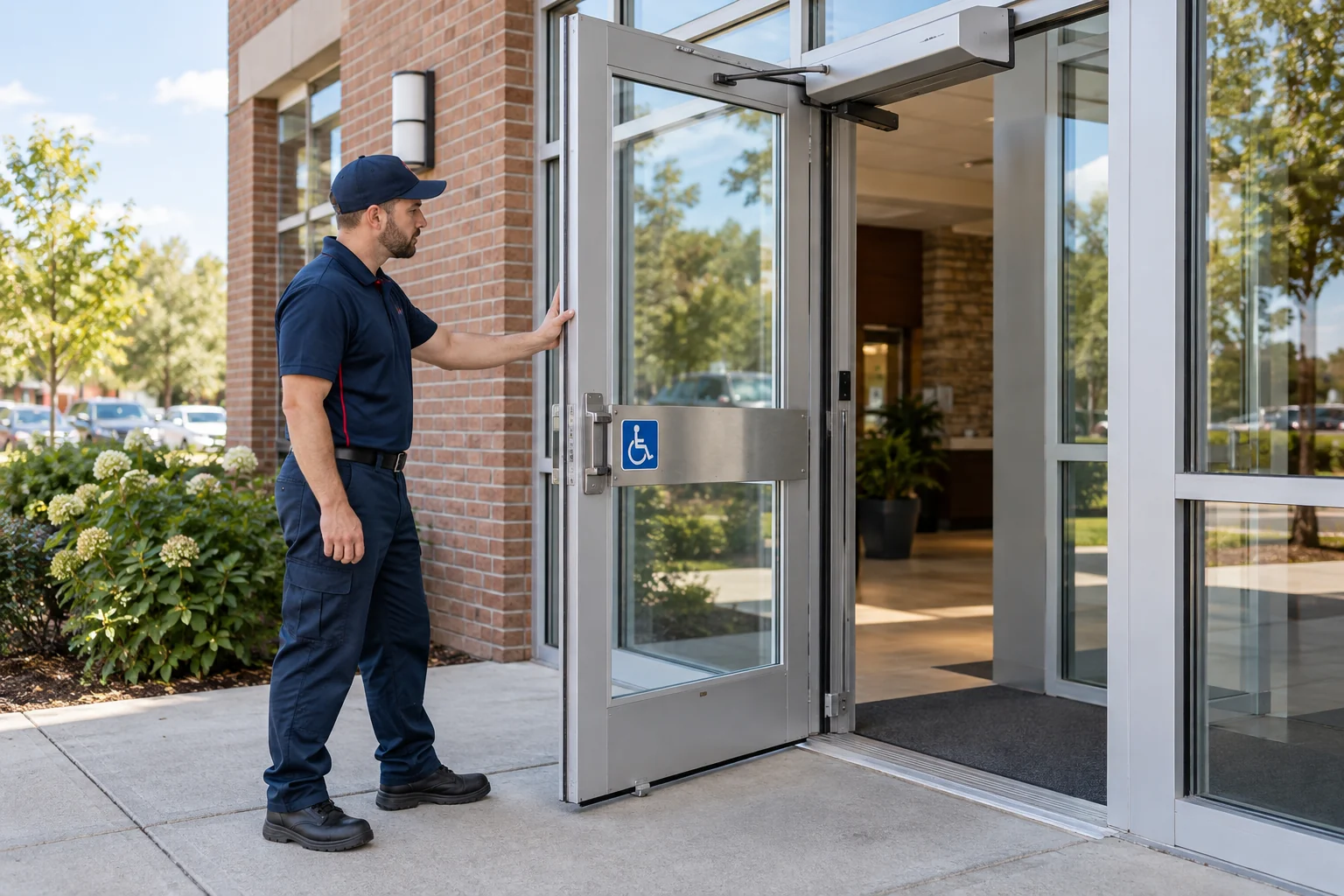
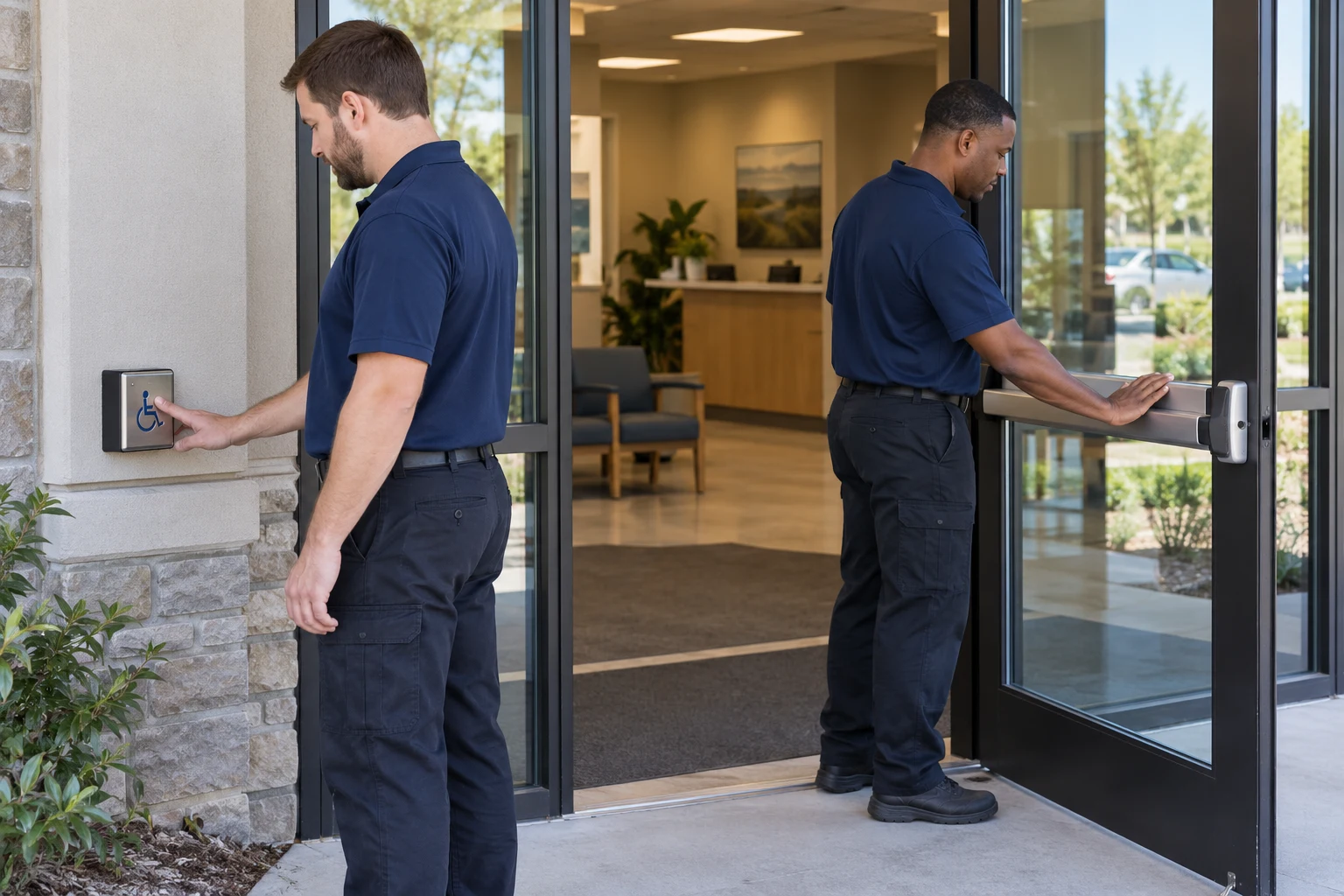
A gauge reading shows how hard the push pad is to press.

D.C. · MARYLAND · VIRGINIA

Built for Wheelchairs, Walkers & Strollers
Low-force push pads and button-ready latches for doors everyone can use.
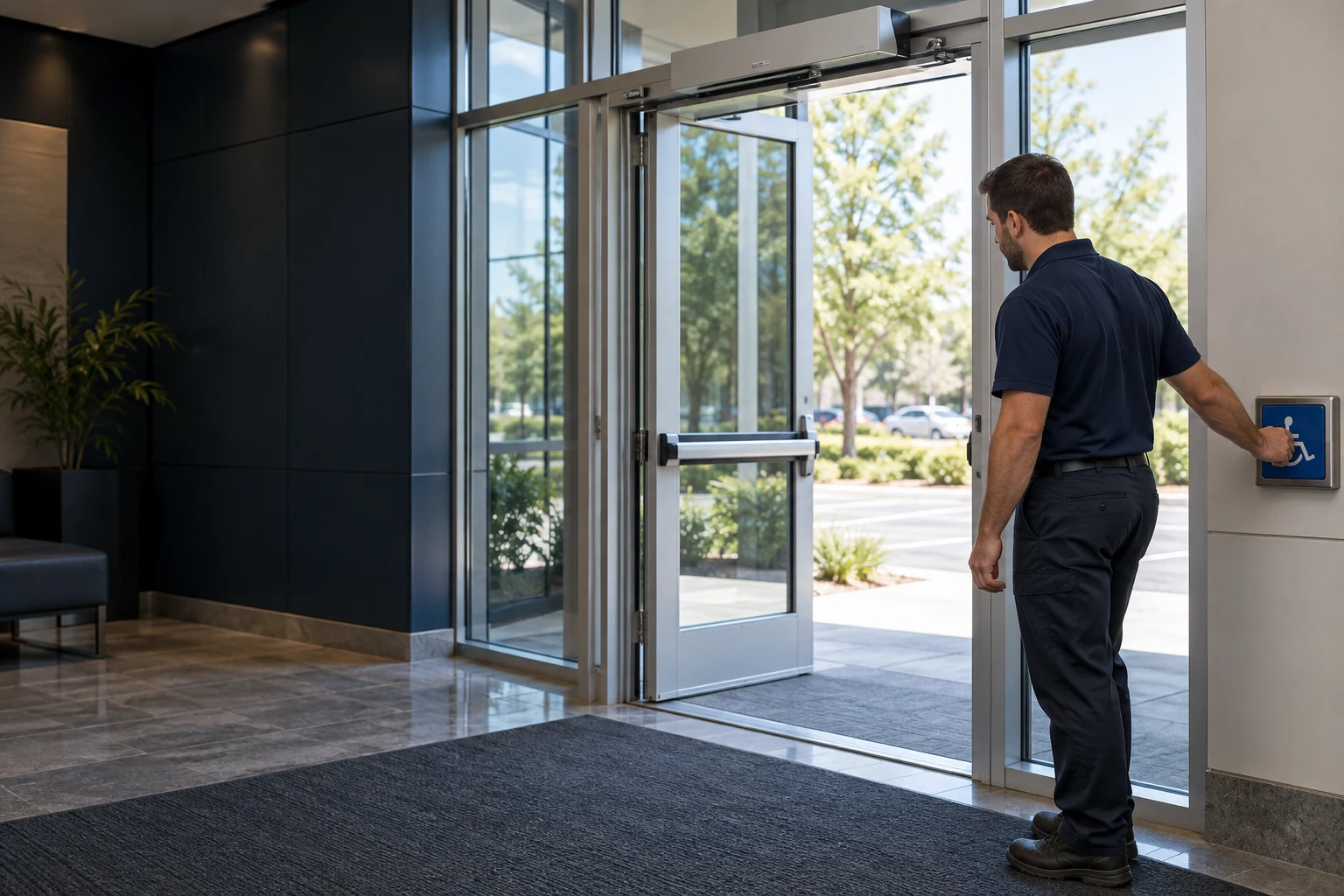
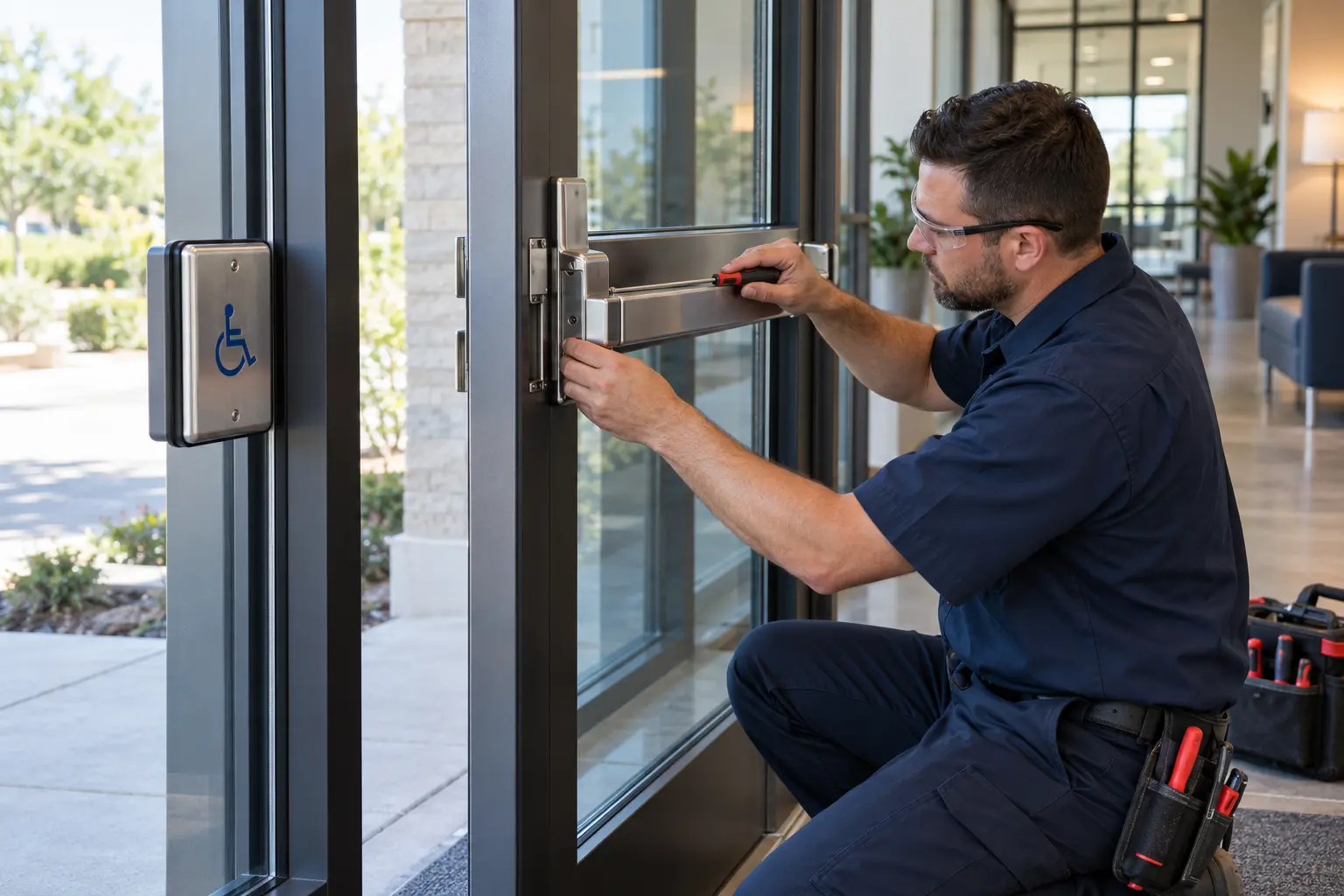
A wheelchair user presses the blue handicap button, hears the opener hum, and watches the door stay shut. The latch is still holding it closed. Many buildings get around this by leaving the exit device unlatched all day. On the way out, a heavy push bar or a bottom rod that catches on footrests can stop that same visitor again. DMV Commercial Door Repair connects the exit device to the push button with electric latch retraction and replaces stiff bars with low-force touchpads. Visitors who once waited for help can now come and go on their own.
Parts you can trust
Every door we fix gets parts from makers that commercial buildings already rely on.










What we fix
Many handicap entrances fall short on three details: a latch the opener can’t release, a push bar that takes a hard shove, and a bottom rod right where footrests and walkers hit the door. The latch causes the most trouble. To get the button working, staff often leave the device unlatched all day. That keeps the door unlocked until someone remembers to lock it again, and on fire-rated doors the shortcut isn’t allowed at all.
Our technicians start with the latch. Electric latch retraction pulls it back the moment the button is pressed. From there, low-force touchpads replace heavy push bars, and double doors lose their bottom rod where the fire rating allows. ADA handicap exit devices set up this way open easily for everyone and still lock at closing time.
Take care of the entrance
A Door That Won’t Open Is Easy to Spot and Easy to Report.
A closer look. A clear price.
Every accessible entrance gets checked against the details visitors and inspectors notice first.
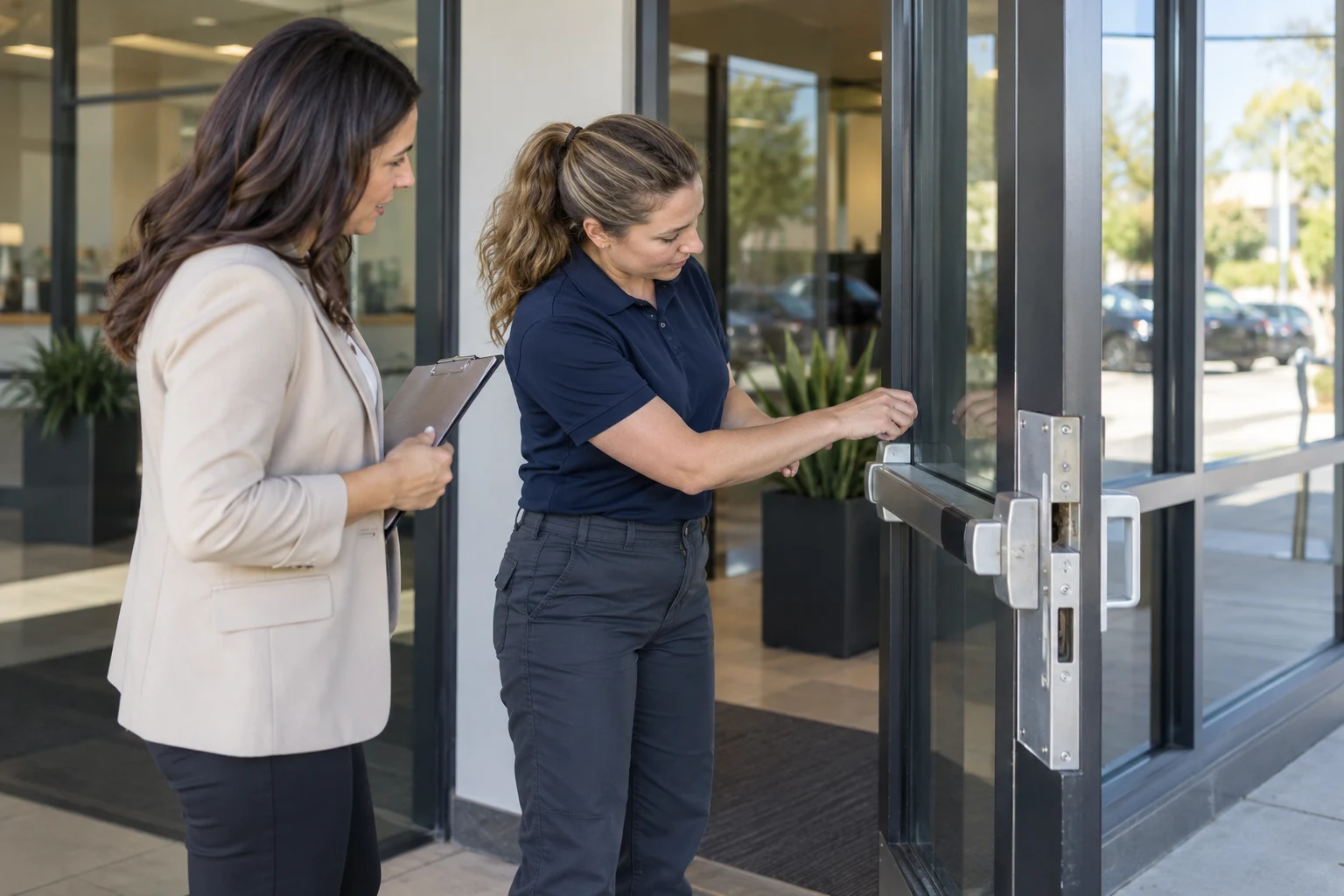
A gauge reading shows how hard the push pad is to press.
The push pad and any pulls get checked against the 34 to 48 inch range.
The push side gets checked for rods or plates that break the smooth surface.
The opener and latch get tested together to confirm the latch clears before the door moves.
Installed with care
ADA handicap exit devices only do their job if the door still protects the building and meets fire code. These rules keep both sides covered.
Secure from outside.
Ready from inside.
A short delay lets the latch retract fully before the opener pushes.
The push pad releases the door by hand, with or without power.
Rated doors keep fire exit hardware that latches every time they close.
Hardware stays out of the bottom 10 inches wherever the opening allows.
Latches return to locked on schedule or when the door shuts.
If the current device can be retrofitted, we upgrade it before quoting a new one.
From our Google reviews
Reviews shared by local business owners.
 Google reviews
Someone smashed the glass on our storefront door around 9 PM. They had a crew out within the hour and boarded it up securely, then came back two days later with the new tempered glass. Professional and fast.
We manage several office buildings in Northern Virginia and use them for all our door hardware. Closers, panic bars, locks, they’ve handled it all. Always on time and the work is clean.
Our restaurant’s front door wouldn’t latch properly and it was a security issue. The tech diagnosed it quickly, replaced the hardware, and we were back open the same day. Fair price too.
Excellent communication from the first call. They gave an honest quote, showed up when they said they would, and the new glass doors look great. Highly recommend for any Maryland business.
Good work replacing the glass on our shop entrance. The scheduling took a day longer than expected because of a glass delivery, but the crew kept us updated and the result was solid.
Called after hours for an emergency board-up and a real person answered. The technician arrived quickly and left the site secure and tidy. That kind of service is rare.
They replaced the aluminum storefront doors at our D.C. retail location. The team was careful around customers and finished ahead of schedule. Great craftsmanship.
Our automatic door closer kept failing and two other companies couldn’t fix it. These guys found the problem in minutes. Wish I had called them first.
Transparent pricing, no surprise fees, and quality safety glass. They explained the options and helped us pick what fit our budget. Will use them again.
Very knowledgeable team. They handled a cracked glass panel on our office door quickly and cleaned up completely afterward. Would use again.
Local expertise. Every entrance.
A door that won’t open on cue may have a tired closer or a misaligned operator arm. Both get a look.
An accessible door that fails after hours can still reach a technician.
If the button and latch fall out of sync after our work, we return at no extra charge.
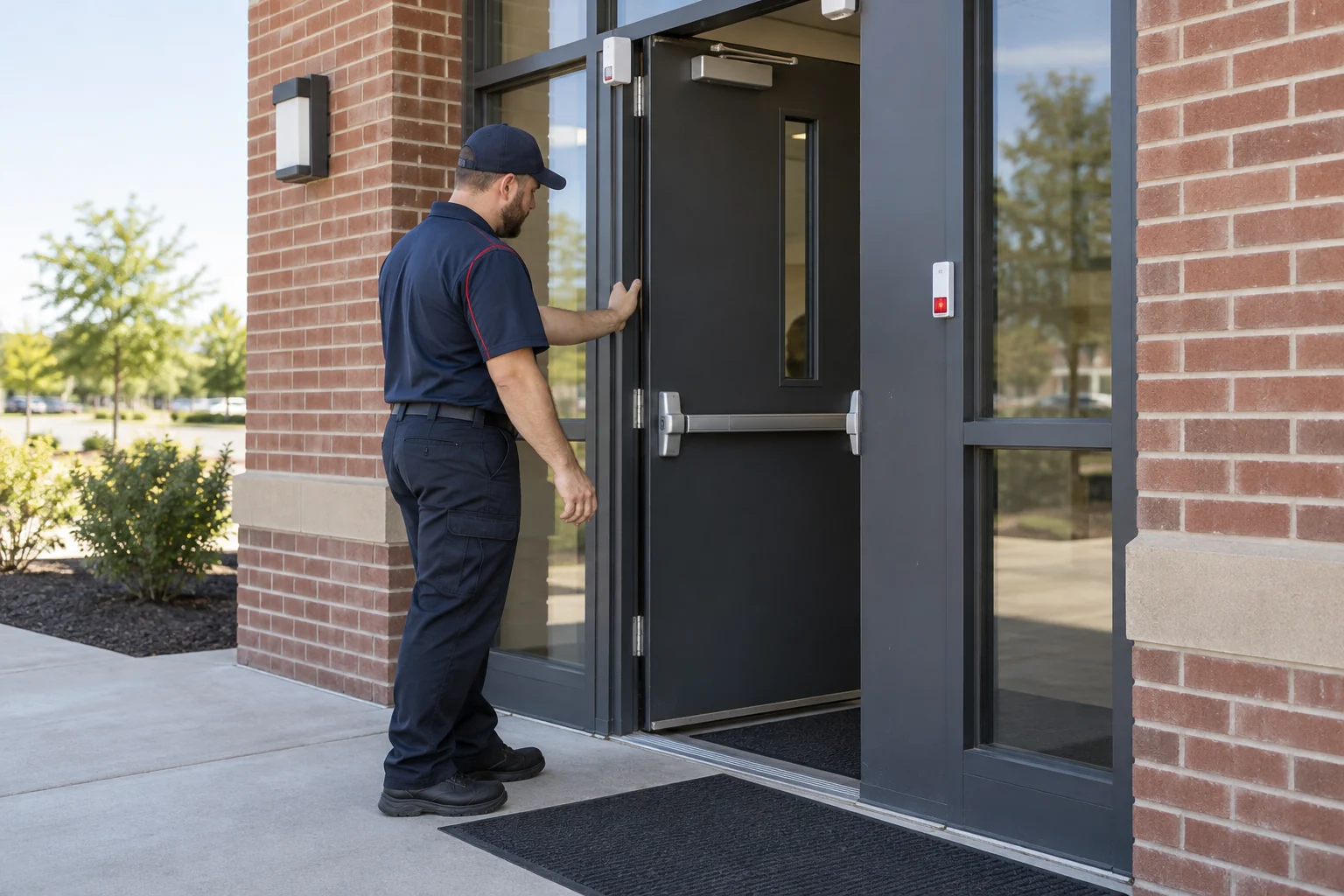
Rim, mortise, vertical rod, and storefront devices, with or without electric latch retraction.
Hardware, wiring, and labor show up line by line before work begins.
Wiring runs happen around open hours, and ceiling tiles go back the way we found them.
We test every door several times before we leave to check smooth operation and reliable release.
Offices, shops, and public building entrances make up our work.
Columbia Heights, Southwest Waterfront, Chevy Chase, Riverdale Park, Rosslyn, and Centreville.
Keep business moving
For someone in a wheelchair, a heavy push bar is hard to press from a seated position. When the handicap button fails too, they’re left waiting at the door until a staff member notices. A free estimate from DMV Commercial Door Repair finds the stiff bars, failing buttons, and bottom rods that keep visitors with disabilities from getting in and out on their own.
Before you book
Accessible exit devices. Clear answers.
Cost depends on whether the current device can take a retrofit kit or needs replacing with new ADA handicap exit devices. Power supplies, wiring runs, and fire-rated hardware add to the total. A door that already has an opener usually needs less work. A free on-site estimate gives the price for each door.
The 2010 ADA standards call for door hardware that works with one hand and without tight grasping or twisting, mounted between 34 and 48 inches. They also reference a 5-pound limit on operating force. The push side must stay smooth within 10 inches of the floor on most doors.
In most cases, the latch is still holding the door closed. The opener can’t pull a latched door open on its own. Electric latch retraction or an electric strike releases the latch first. A failed power supply or a loose wire can cause the same problem.
Yes, anyone searching for ADA exit device installation near me in D. C., Maryland, or Northern Virginia can book a visit with our technicians. The service area covers Washington, D. C., Montgomery and Prince George’s counties, Arlington, Alexandria, and Fairfax County. Call us to confirm an address.
On a non-rated door, yes, though the door stays unlocked until someone undogs it. Fire-rated doors can’t be dogged at all. Electric latch retraction solves both problems by releasing the latch only when the button is pressed.
The bottom rod often sits in the 10-inch zone that must stay smooth on the push side. Less bottom rod devices or concealed rods usually clear that zone. Some existing doors fall under exceptions, and a technician can check which applies.
Many popular exit devices accept a retrofit kit that adds electric latch retraction without replacing the whole device. Older or discontinued models may need a new device. The free estimate confirms which option fits each door.
Let’s take a look
Tell us about the door, the damage, and where you need help.
Across the DMV
Washington, D.C. · Montgomery County · Prince George’s County · Arlington · Alexandria · Fairfax County