
The useful takeaway
Keep the entrance clear, follow the instructions for your specific door, and get a technician involved when operation is unreliable.
Describe the failure before changing anything
“The automatic door is broken” can mean several different things. A push button may make no sound, an operator may hum without moving the leaf, or a sliding panel may stop partway across the opening. Start by writing down the exact behavior and which entrance is affected.
Note whether people can still open the door by its intended manual method, whether the door is stuck open or closed, and whether the fault happens on every attempt. Do not force the panel or use people to test a door that appears unsafe.
Keep the approach clear
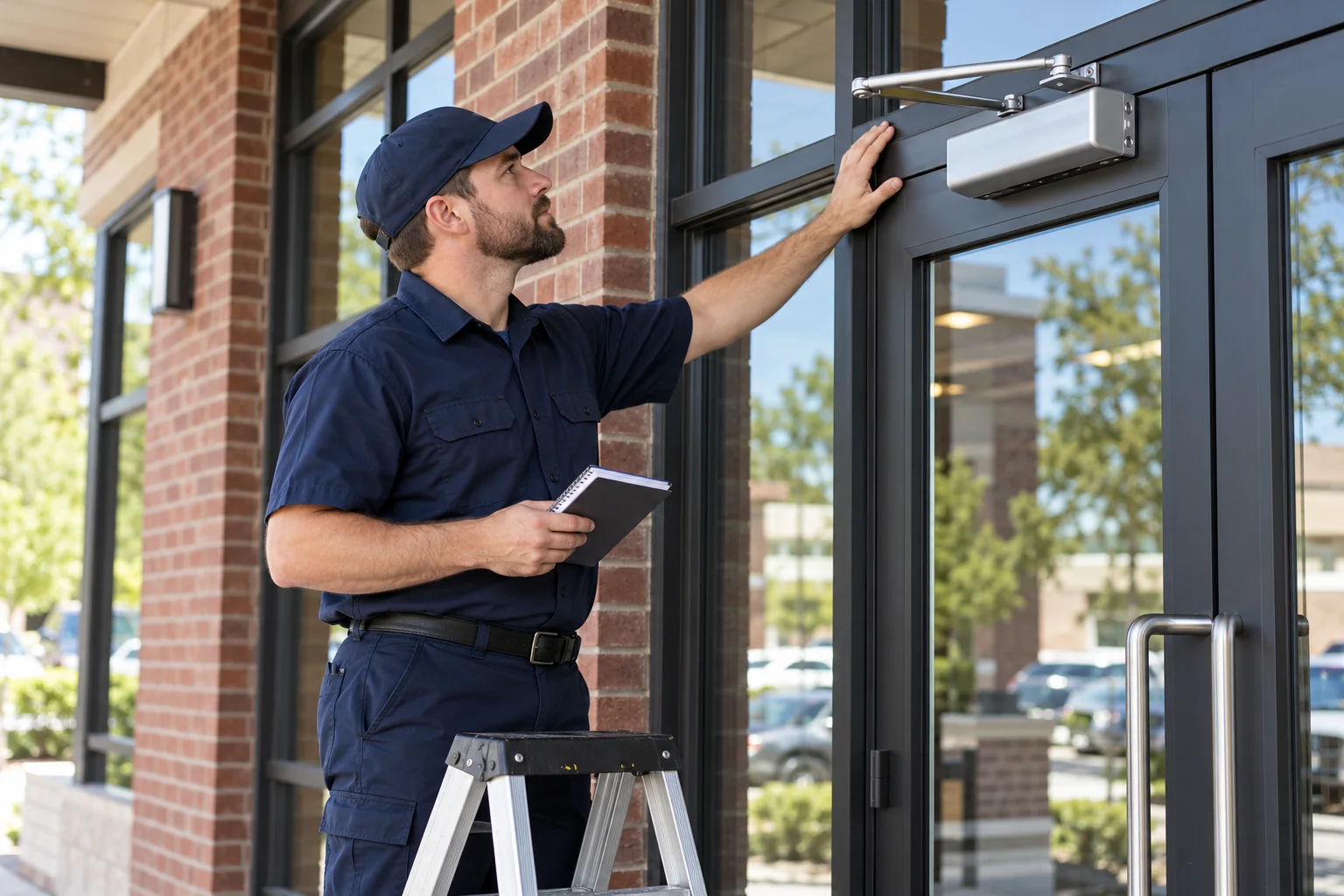
STANLEY’s troubleshooting guidance notes that objects near a door can interfere with sensors. A plant, delivery box, sign, or decoration can change what the system detects. Look at the approach and the doorway for an obvious obstruction, without opening covers or reaching into the mechanism.
Keep the ordinary walking route free of stored items. If the area looks clear but the door still behaves unpredictably, report the symptom rather than repeatedly moving settings. A door that opens without anyone approaching needs a different explanation from one that does not respond at all.
Check the operating instructions for your model
A system placed in a hold-open or closed mode may behave differently from one set for automatic operation. Check the owner’s instructions for the particular door before interpreting its controls. Manufacturer-specific checks are more useful than applying advice intended for another model.
Follow the manufacturer’s daily safety-check procedure and your building’s operating process. STANLEY advises taking an unsafe or malfunctioning door out of operation and contacting a qualified technician. Leave covers, wiring, and technical adjustments to the service team.
Tell the technician about connected hardware
An automatic entrance may depend on more than the operator. Include any push plates, keypad, card reader, intercom, or electric release in your description. Explain whether the problem started after a power interruption, a hardware change, or work on the building.
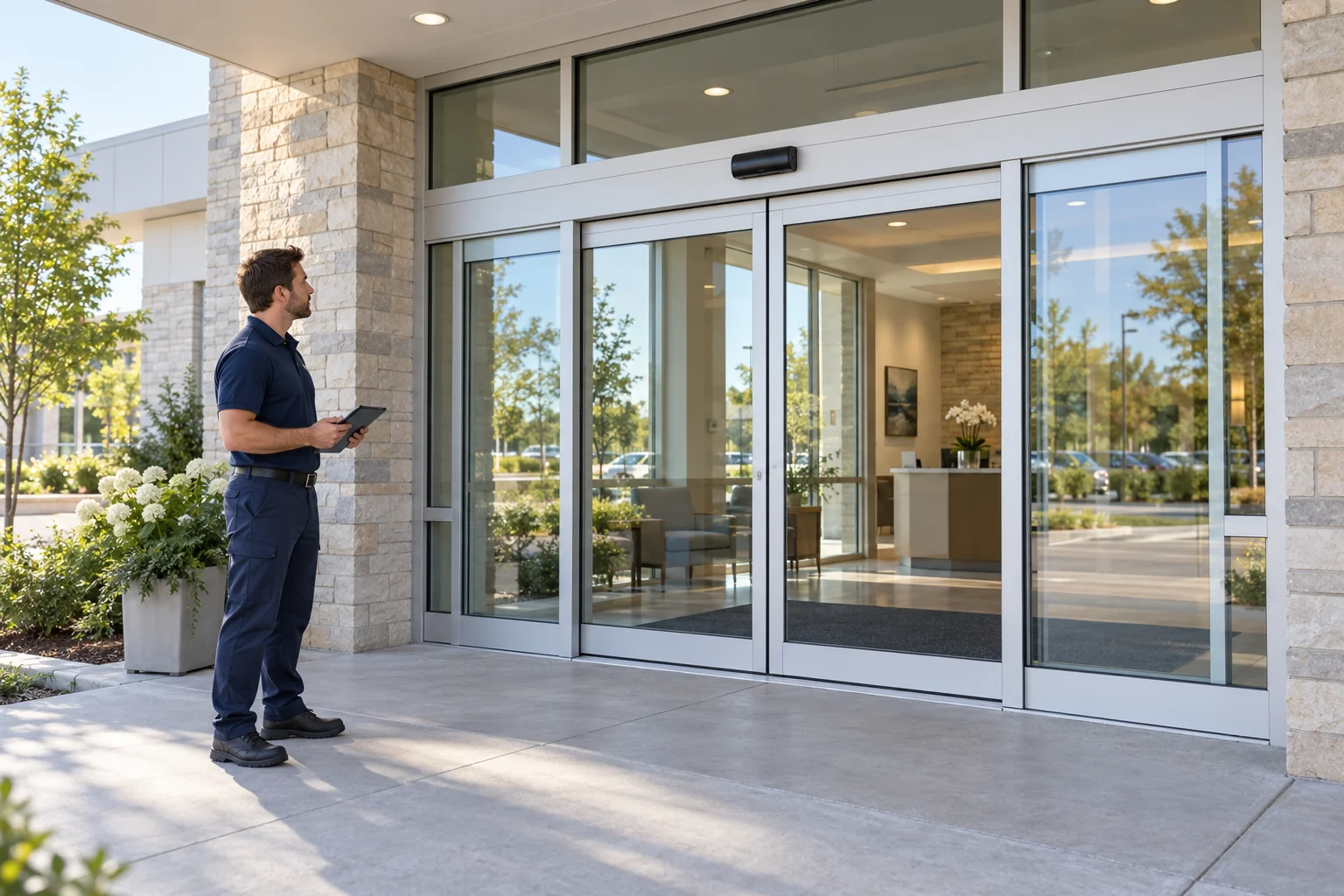
For a push-button entrance, note whether the button gives its usual visible or audible response. For a sliding entrance, describe any scraping or hesitation you have already observed during normal use. The goal is to give the team useful context without recreating a risky failure.
Plan access while the door is checked
Tell the service team which entrance customers normally use and when the building is busiest. Ask your building manager how to direct visitors during the visit, including people who rely on the accessible entrance. Do not block a designated exit or improvise a lock arrangement to keep trading.
A repair request is more useful when it includes the address, door type, brand if visible, symptoms, and current access situation. DMV Commercial Door Repair handles automatic operators, sliding entrances, and the hardware those systems depend on. Choose the relevant service or contact the team to discuss the whole opening.