
The useful takeaway
Share the location, the door’s symptoms, a few clear photos, and the best time to reach the person who can arrange access.
Identify the entrance clearly
Start with the business location and ZIP code, then name the specific opening. “Rear delivery door beside the loading area” is more useful than “back door” when a property has several entrances. If you manage multiple sites, include the building name and the contact person for that location.
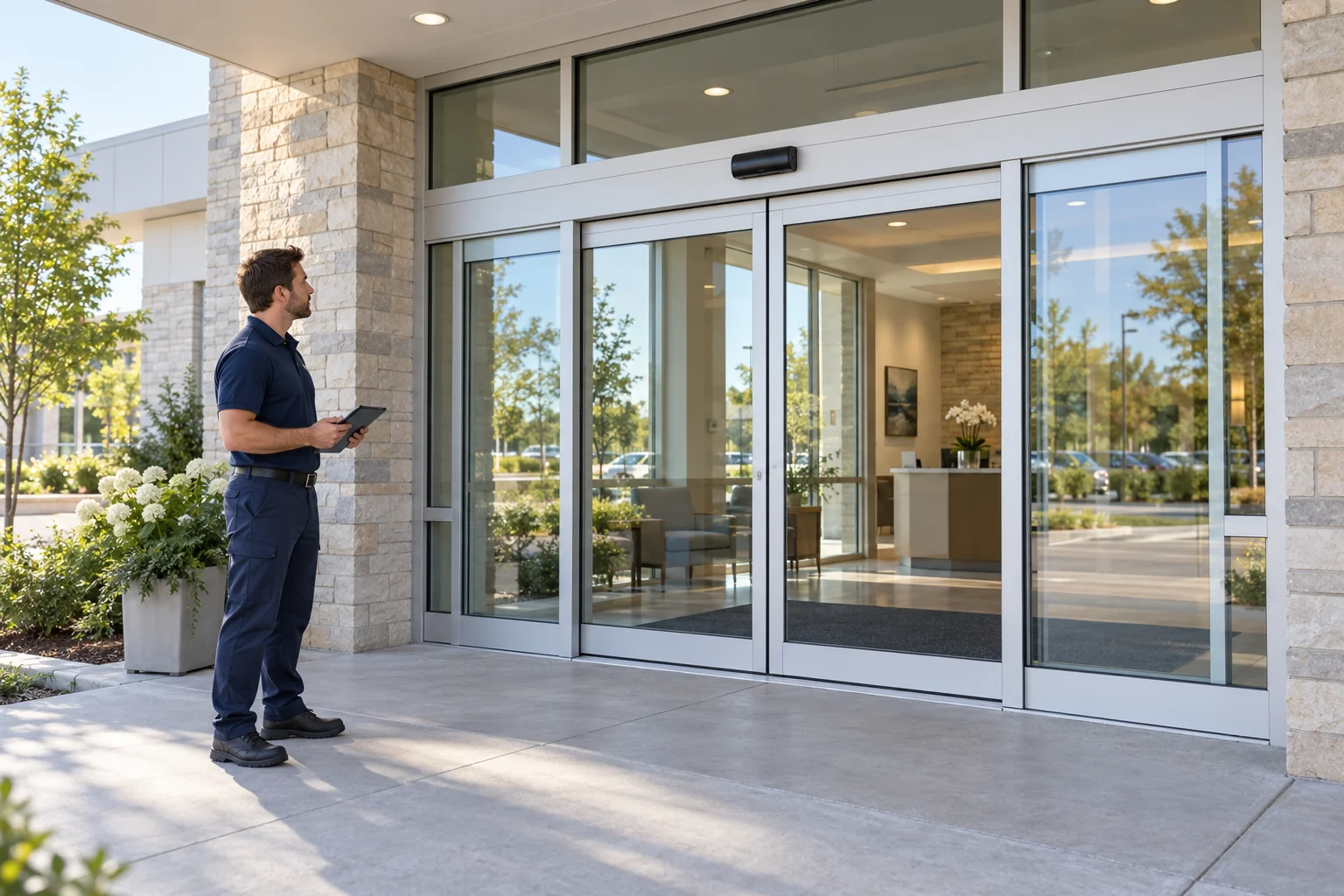
Describe the door itself in plain language. It might be an aluminum storefront with glass, a steel service exit, a pair of lobby doors, or an automatic slider. You do not need to know the hardware model to ask for help. A clear wide photo often supplies that context.
Explain the symptom in everyday words
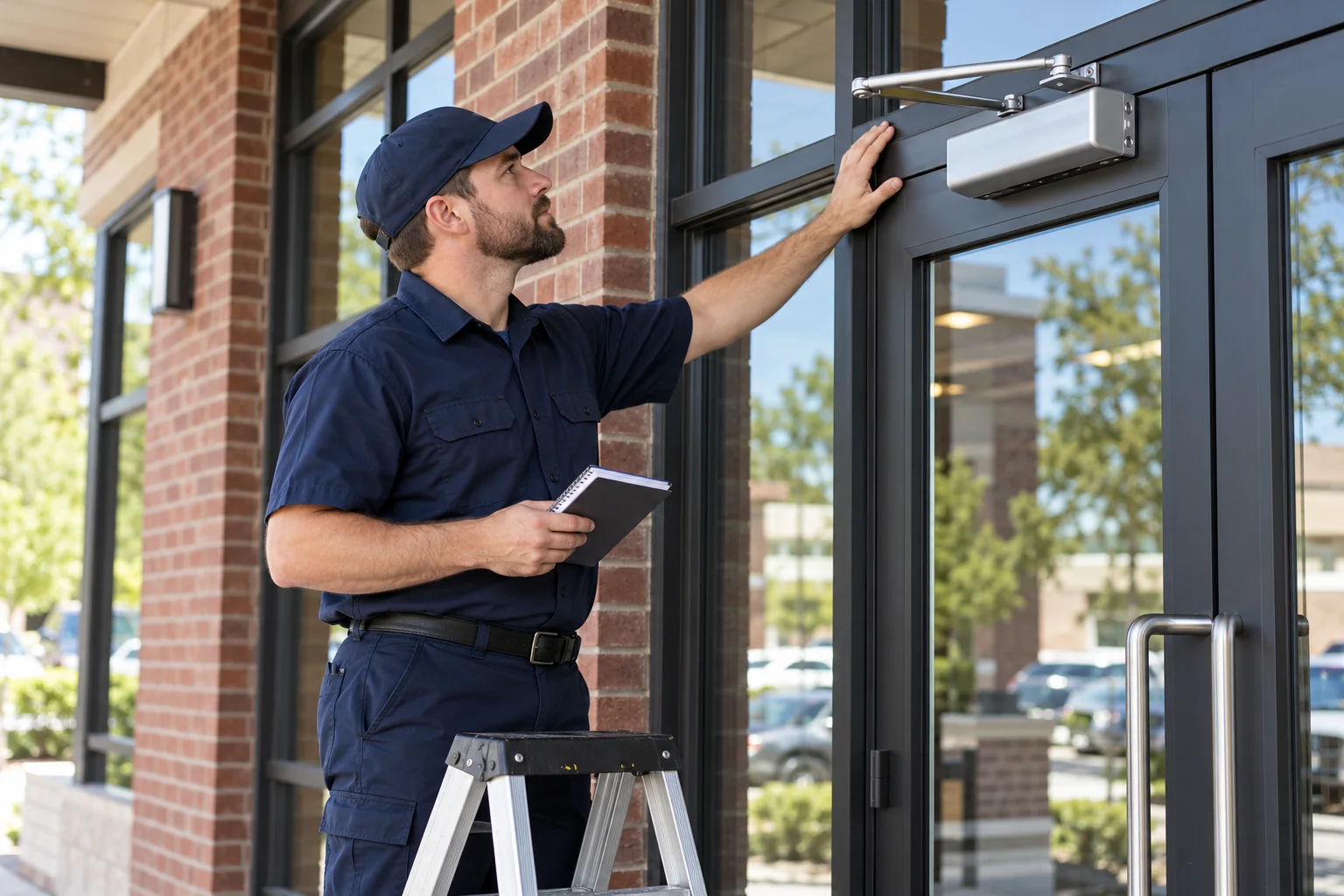
Say what the door does, not just what you think needs replacing. Useful descriptions include a lever that droops, a door that rubs at the top corner, a closer that leaks, a latch that misses the frame, or an alarm that sounds during normal deliveries.
Include when the issue began and whether it happens consistently. If someone has already tightened, adjusted, or replaced a part, mention that too. It helps the technician understand the history without starting the conversation again at the entrance.
Make the access situation clear
Tell the team whether the entrance currently closes, latches, and locks, and whether customers can use it. A door that cannot secure the business at closing needs a different conversation from a handle with cosmetic wear. Describe the current situation without downplaying an intermittent problem.
If your building has an access-control system, let the technician know who can authorize access and demonstrate the fault. Do not send staff codes or credentials in an ordinary repair message. Arrange for the responsible manager to be present when the system needs testing.
Set up a useful estimate conversation
Provide your name, a callback number, and the hours when the affected entrance is quietest. Mention delivery schedules or other constraints that affect access. Ask what the visit will check, which parts are included in the proposed work, and how the price will be presented before work begins.
Keep the written estimate with your maintenance records. It should help you understand the recommended repair and any follow-up work, rather than leave you guessing which entrance or component was discussed. Start with the contact page to share the details of your commercial door problem.