The useful takeaway
Notice when the slam happens, look for visible damage, and have the door and its hardware checked together.
Start with what the door is doing
A door that bangs shut every time a customer leaves is more than background noise. It interrupts the room, puts strain on the entrance, and makes the door unpleasant to use. Before calling for service, watch a normal opening and closing cycle from a safe distance. Does the door move too quickly through the whole swing, or does it accelerate only in the last few inches? Does it meet the frame cleanly, or strike the edge before it closes?
Those observations help explain the problem without taking the hardware apart. Note whether it happens all day, only when another entrance is open, or after the building ventilation starts. Tell the technician what changed and when you first noticed it.
Understand the closer’s job
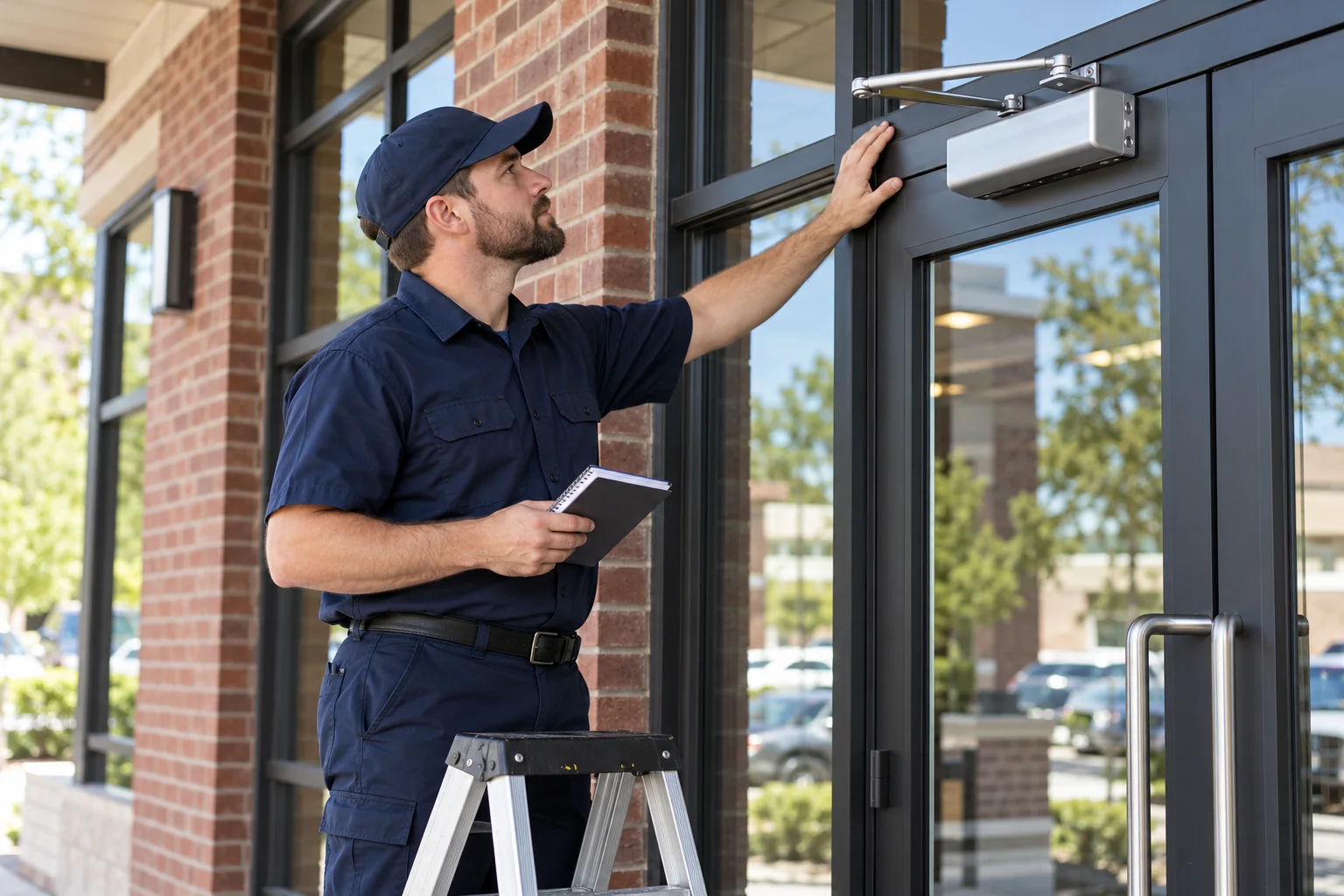
The closer controls how the door returns toward the frame. A door that slams may have incorrect settings, an oil leak, or damaged internal components. Allegion identifies all three as possible causes. A technician needs to establish which one is responsible before deciding whether adjustment, repair, or replacement is appropriate.
Visible oil around the closer deserves attention. Wiping it away does not address the cause of the leak. Photograph the closer and the area below it, then share that information when you request a visit. Do not assume a harder spring or a faster latch setting will solve the problem.
Look beyond one piece of hardware
A closer is attached to a working door, not an isolated test bench. A leaf that drags, a loose hinge, or a latch that misses its strike can change the way the entrance behaves. Ask for the door, frame, hinges, closer, and latch to be checked together.
This matters when the same adjustment keeps getting repeated. Record how long the previous repair lasted and whether the problem returned gradually or suddenly. That history can help distinguish a recurring alignment issue from a newly failed component.
Know what to send with your request
Send a wide photo of the entrance, a close photo of the closer with its brand visible, and a short description of the closing action. Include the business ZIP code and whether the entrance can currently close and latch. If you can record a normal cycle without standing in the door’s path, a short video may make the symptom clearer.
If the door feels unsafe or cannot secure the building, call instead of waiting for a routine appointment. Keep visitors away from the affected opening while you arrange assistance, and follow your building’s procedures for maintaining access.
Ask for a complete closing check
Before the job is finished, ask the technician to demonstrate how the door opens, closes, and latches. Discuss any changes in push effort and any parts that were replaced. A written estimate should explain the proposed work before it starts, so you understand what is being fixed and why.
DMV Commercial Door Repair services surface closers, concealed closers, hinges, and related commercial entrance hardware across D.C., Maryland, and Northern Virginia. Share the symptoms to plan the right visit.